 Home >> Social Media Algorithm Changes in 2026
Social Media Algorithm Changes in 2026
 24 – Jan,2026 – Social Media
What Dubai Brands Need to Know
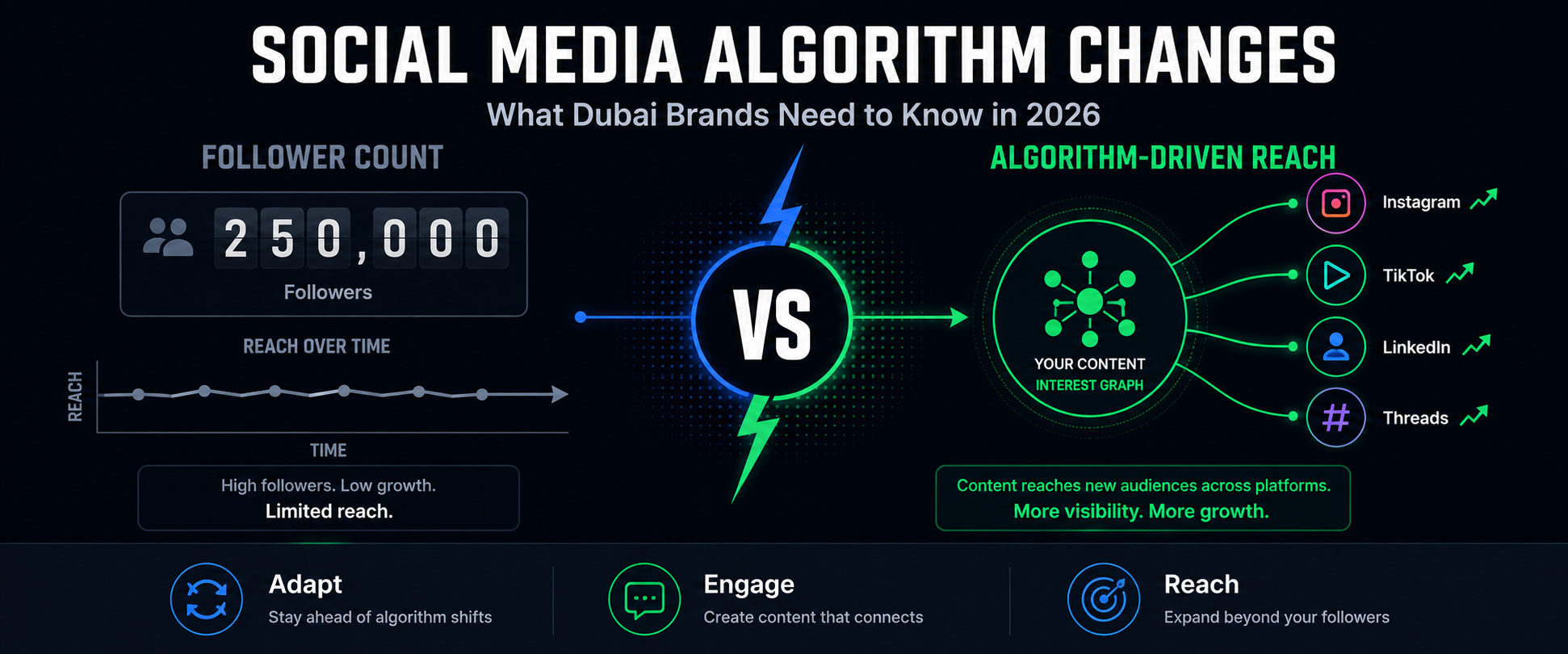
Social media algorithms are the systems each platform uses to decide whose content gets shown, to whom, and in what order, and in 2026, those systems have shifted decisively toward interest-graph distribution and AI-driven recommendations, rather than follower count or posting frequency. Follower count and algorithm reach aren’t the same thing anymore. A brand with 500 followers can outperform one with 50,000, if the content matches what the algorithm is currently rewarding.
That distinction matters more this year than in any year before it. Instagram, TikTok, LinkedIn, and Threads have all meaningfully changed how they distribute content in 2026, and most Dubai brands are still posting the way they did two years ago, hoping consistency alone will carry them.
That’s the short version. Here’s the full picture, including what it actually looks like when a social strategy is built around how these algorithms work today, not how they used to.
Posting More Isn't the Same as Reaching More
If you’ve been posting consistently and still watching reach flatten out, you’re not imagining it. Consistency used to be the main lever. In 2026, it’s necessary but nowhere near sufficient on its own.
Why? Because every major platform has shifted toward distributing content based on interest signals and content quality, not just follower relationships or posting cadence. A brand can post daily and still get buried if the content doesn’t match what the algorithm is currently prioritizing.
Reaching new audiences, interest-graph distribution means strangers can discover your content, not just existing followers Rewarding original content, algorithms increasingly favor distinctive, first-hand content over recycled or templated posts Adapting in real time, platforms now reward brands that respond to trending conversations quickly, not just on a fixed schedule
If a business is looking for reach that doesn’t depend entirely on a large existing following, understanding how these algorithms actually work in 2026 is where that starts.
1. Most Brands Are Still Optimizing for the Wrong Signal
Plenty of Dubai brands are still chasing follower count and posting frequency as their main social media KPIs. That’s an opening, not a disadvantage, because the brands that shift focus toward content quality and platform-specific algorithm behavior are the ones capturing the reach everyone else is missing.
What Changed in Social Media Algorithms for 2026?
Social media algorithms in 2026 have moved from follower-based distribution toward interest-graph and AI-driven recommendation systems across nearly every major platform. Instead of showing content primarily to a user’s existing network, these systems increasingly match content to interest signals, topic relevance, and engagement quality, meaning strangers can see and engage with a brand’s content just as easily as its own followers can.
This matters because the shift changes what “growth” actually looks like. A large follower count still matters for credibility, but it’s no longer the primary driver of how far a piece of content travels. Content quality, format, and timing now carry more weight than the size of an existing audience.
How Do These Platform Algorithms Actually Work in 2026?
Each major platform has its own version of this shift, and knowing the differences matters for where a brand puts its effort.
Instagram continues prioritizing short-form video and original content, with organic activity on the platform trending upward again among marketers after a period of leaning harder into paid.
TikTok rewards agility above almost everything else, brands that jump on trending formats and sounds early consistently outperform those posting polished content on a delay.
LinkedIn’s algorithm was substantially rebuilt in early 2026, now using language-model-based understanding to match content to users by topic interest and semantic relevance, not just professional connections.
Threads is gaining real momentum, with an algorithm built around real-time topic discovery rather than follower count, meaning a post can spread by fitting a trending conversation, not by going viral within an existing following.
Facebook Groups continue getting distribution advantages, since the platform treats them as higher-intent spaces than the general feed.
The practical implication: a single cross-posted piece of content, unchanged across platforms, will underperform on all of them. Each algorithm now rewards platform-specific behavior, not generic consistency.
Why Meta Ads and Content Strategy Matter Too
Organic algorithm shifts alone won’t cover the full picture either. That’s why two more pieces matter:
Meta Ads still give a brand guaranteed reach and precise targeting that organic algorithms, however favorable, can’t fully replace Strong original content is what both organic algorithms and AI search increasingly reward, tying social strategy directly to broader content and work Organic reach f
So, What's the Big Takeaway?
The biggest lesson here: the algorithm doesn’t care how long you’ve been posting, it cares whether today’s content matches what it’s currently rewarding. A brand that adapts format and timing to each platform’s current behavior will consistently outreach a brand that just posts more often without adjusting anything else.
How Your Business Can Generate Revenue From Social Media
Organic social is no longer just a brand-awareness channel, it’s a discovery engine when it’s built around how today’s algorithms actually distribute content. With the right approach, a business can:
Reach new, non-follower audiences through interest-graph and topic-based distribution Build trust and familiarity that improves how paid campaigns perform when they run alongside organic content Reduce dependency on any single platform by adapting content specifically to how each one distributes it
If your business’s social content is getting likes from the same small audience every time, that’s not a content-quality problem alone, it’s usually a platform-strategy problem. INNOVAHUB builds social media strategies around how each platform’s algorithm actually works today, not generic best practices. Let’s make sure your content is reaching people who’ve never heard of you yet.
Reach audiences across Search, YouTube, Display, Gmail, Maps, and Discover from a single, more efficient campaign Improve ROAS over time by feeding the algorithm accurate conversion data and strong creative variety Reduce wasted spend by protecting branded terms with account-level negative keywords
If your business’s Performance Max campaign is spending steadily but not converting, that’s not a PMax problem, it’s a signal problem. INNOVAHUB builds Performance Max campaigns around real conversion data and creative strategy, not default settings. Let’s make sure your ad budget is working as hard as the algorithm is.
FAQ Section
How did social media algorithms change in 2026?
Most major platforms shifted further toward interest-graph and AI-driven distribution, meaning content is increasingly shown based on topic relevance and engagement quality rather than a user’s existing follower network alone.
Does follower count still matter in 2026?
It still matters for credibility and community, but it’s no longer the primary driver of reach. Content that matches what the algorithm currently rewards can outperform accounts with far larger followings.
What's different about the Threads algorithm?
Threads distributes content based on real-time topic discovery rather than follower relationships, meaning a post can spread by fitting a trending conversation instead of relying on an existing audience.
How did LinkedIn's algorithm change in 2026?
LinkedIn rebuilt its algorithm to use language-model-based content understanding, matching posts to users by topic interest and semantic relevance rather than relying mainly on professional connections
Should I post the same content across every platform?
No. Each platform’s algorithm now rewards different formats and behaviors, so a single piece of content reused everywhere unchanged will typically underperform compared to content adapted for each platform specifically.
Do I still need paid social if organic reach is improving?
Yes. Organic and paid serve different purposes, organic builds discovery and trust through the algorithm, while paid guarantees reach precisely when and where a business needs it, and the two reinforce each other.
How can organic social and paid ads together help generate revenue?
Together they cover the full journey: organic content builds trust and algorithmic discovery, while paid campaigns like Meta Ads convert that familiarity into leads and sales more efficiently than either channel could alone.
Ready to Build a Strategy That Actually Works?
A social media strategy is only as strong as the system behind it. Innovahub helps brands across Dubai turn scattered posting into a focused, measurable strategy built for how platforms actually rank content in 2026.